Expert consensus review
Garmin Approach R50 Review
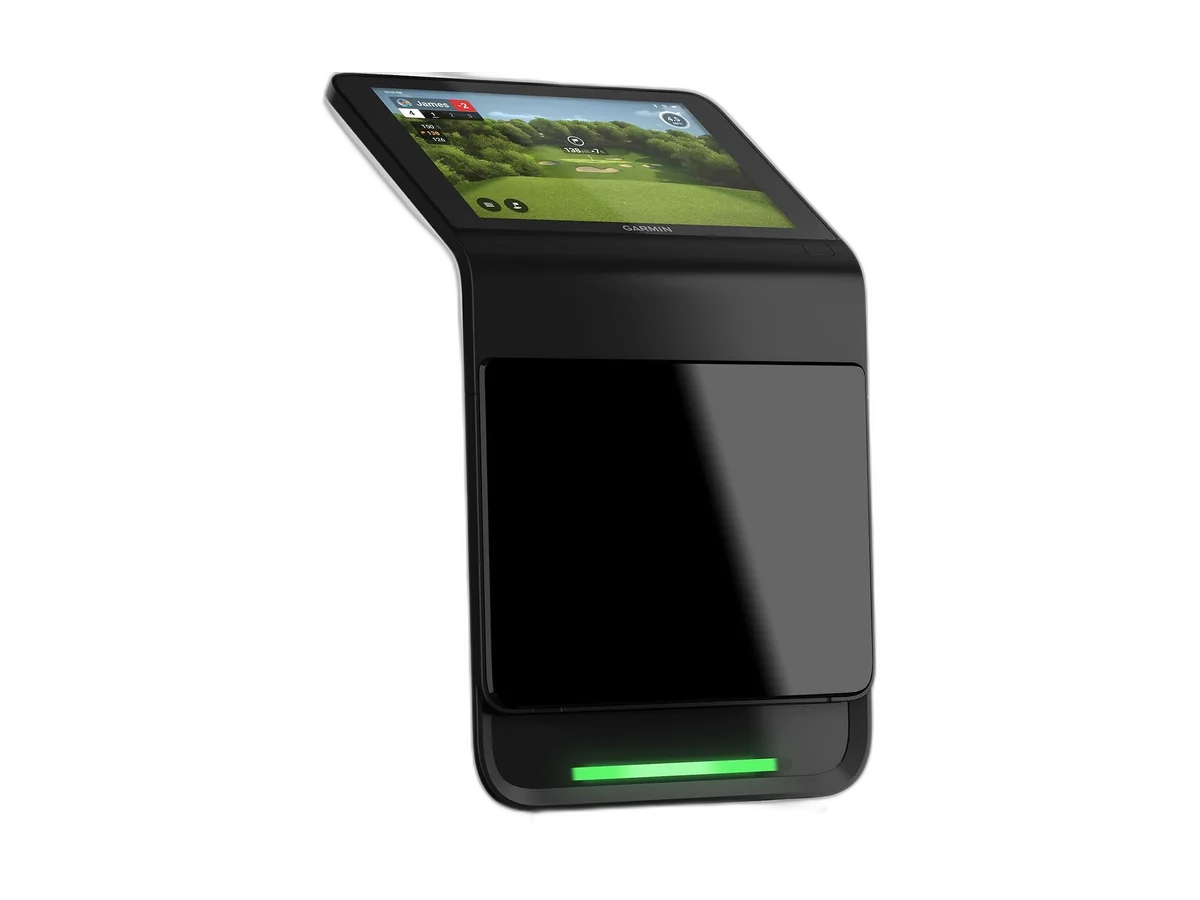
Garmin's all-in-one camera launch monitor: measured spin, a built-in 10-inch screen, and simulator golf without a PC — premium money that makes sense only if it becomes your home bay.
What we like
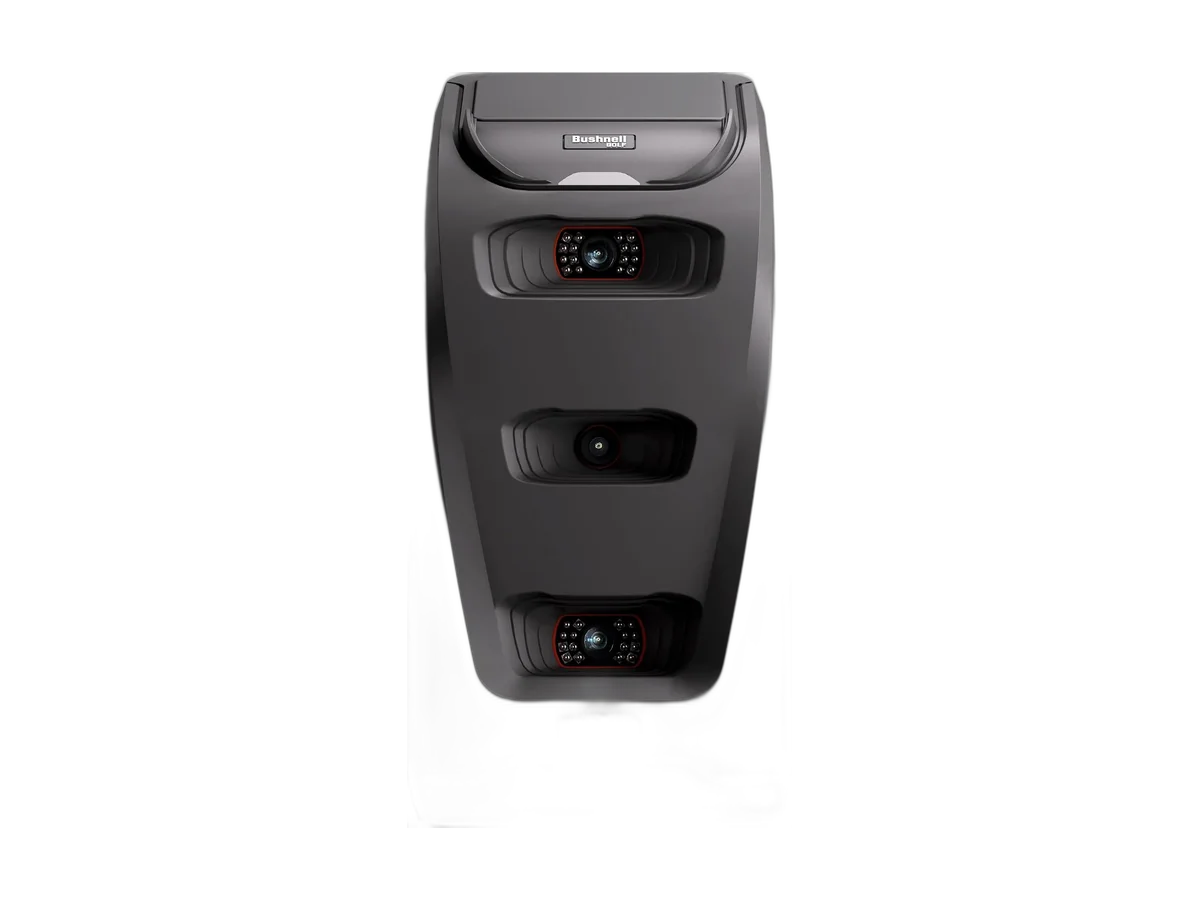
- Three high-speed cameras measure spin rate and spin axis indoors and out
- Built-in 10-inch touchscreen runs Home Tee Hero without a separate gaming PC
- HDMI output, included case, and listed battery life of up to four hours
- Works with any golf ball; club data uses Garmin's tracking stickers
What to weigh
- Garmin lists the unit at $4,999.99, so it only makes sense as the center of a bay
- Home Tee Hero course play requires a Garmin Golf membership
- Club path is read from a sticker on the face, not the whole clubhead
- Four hours of battery is well short of the R10's listed 10 hours
Scorecard
How scores are built- Accuracy 9.0
- Ease of use 8.7
- Value 7.6
- Build 8.8
- Software 8.8
This review weighs the manufacturer specifications, independent testing from across the golf equipment world, and long-term owner feedback, then scores the product against its closest alternatives. It is not presented as a GolfTested lab measurement.
Quick answer
We’d buy the Garmin Approach R50 when the bay is the product: a camera unit with a 10-inch screen that measures spin and plays courses without a separate PC. Garmin lists more than 15 ball and club metrics, any-ball spin, and up to four hours of battery. Skip it if you only want portable range numbers.
What Garmin says it is
Garmin calls the Approach R50 a premium launch monitor and simulator, and its own store lists the unit at $4,999.99. This review’s buy box uses the catalog price on the tracked listing. It is not a live checkout price.
The tracking method is the reason to consider it. Garmin’s comparison with the R10 says the R50 uses three high-speed cameras to capture more than 15 ball and club metrics, including spin rate and spin axis, plus high-speed impact video. Those cameras read a small area around impact. Garmin says that makes the unit less sensitive to wind than a radar that follows a longer ball flight, and that it needs less indoor space than the R10 because the radar unit has to sit behind you.
Club data is not free. Garmin’s footnote says included tracking stickers are required. The sticker is what the cameras measure: speed and path of that point on the face. The R10, by Garmin’s account, reads the clubhead itself because that is the strongest radar return.
Spin, balls, and clubs
Garmin says the R50 measures total spin and spin axis both indoors and outdoors, and that you can use any golf ball. That is the practical split with the Approach R10. Garmin says the R10 can measure total spin indoors if you use Titleist RCT balls, and that it calculates spin axis from launch direction and club path rather than seeing the axis the way the cameras do.
The same page says the R50 works with every club, including putters, and that you can putt in Home Tee Hero. A driver, a wedge, and a putter on one unit is the indoor case. It is not a reason to carry a $5,000 monitor instead of a rangefinder.
The screen and the membership
Home Tee Hero is on both units: Garmin says more than 43,000 courses, and the footnote says a subscription is required. The R50 difference is where the round runs. Garmin says the 10-inch color touchscreen is the simulator by itself. You do not need a gaming PC. HDMI can send the picture to a projector or TV, and Garmin says you can put the course on the big screen while data or impact video stays on the unit.
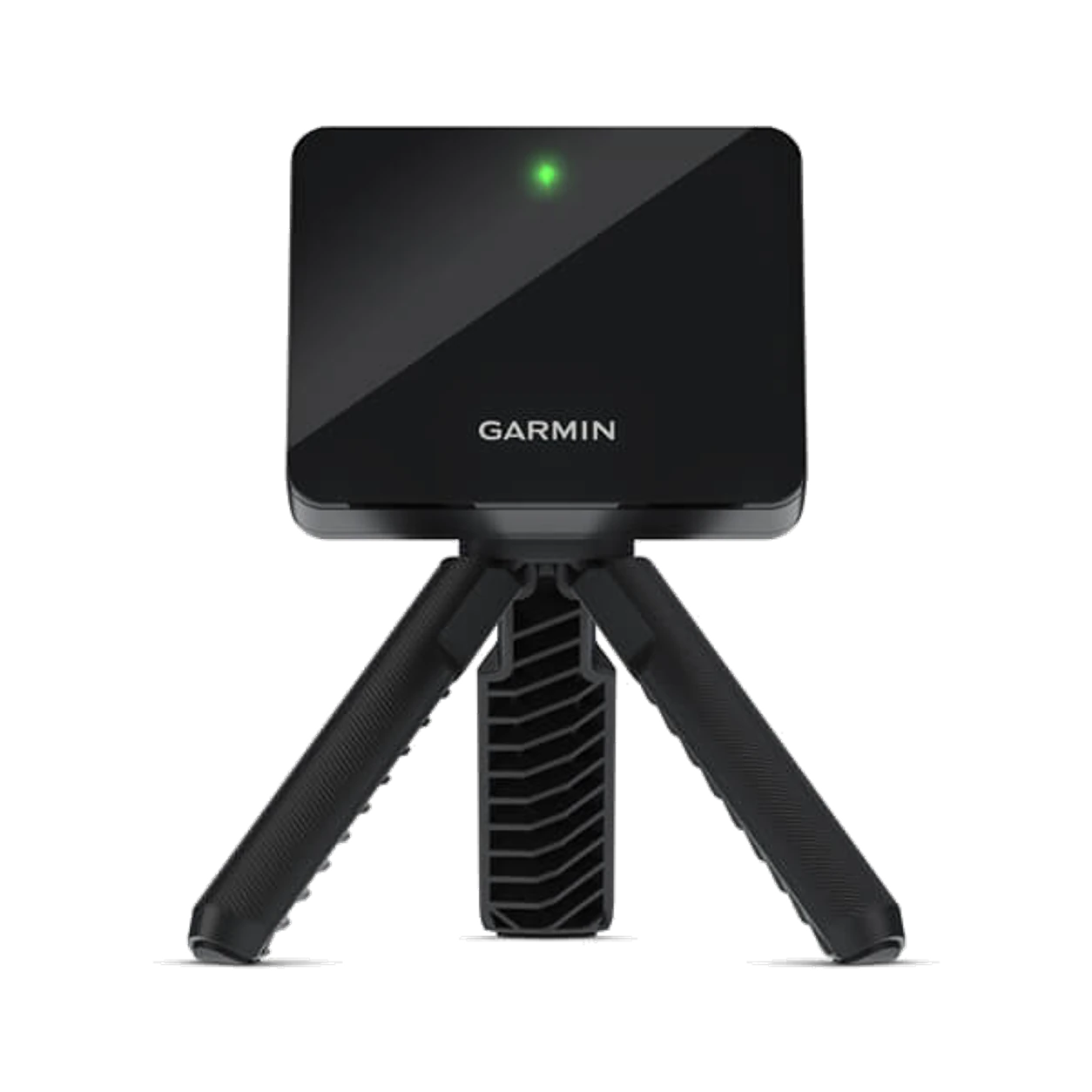
The R10 runs the same simulator through the Garmin Golf app on a phone or tablet. If you already own a projector, a gaming PC, and an R10, the R50 is not an automatic upgrade. It is the Garmin you buy when you want one box to do data and course play.
Battery life is listed at up to four hours, with a carrying case in the box. Garmin lists up to 10 hours for the R10. Four hours is a range session, not a full day of walking the course with the unit out. The case is for moving between a spare room and the range, not for living in a golf bag the way the R10 does.
Who should buy it
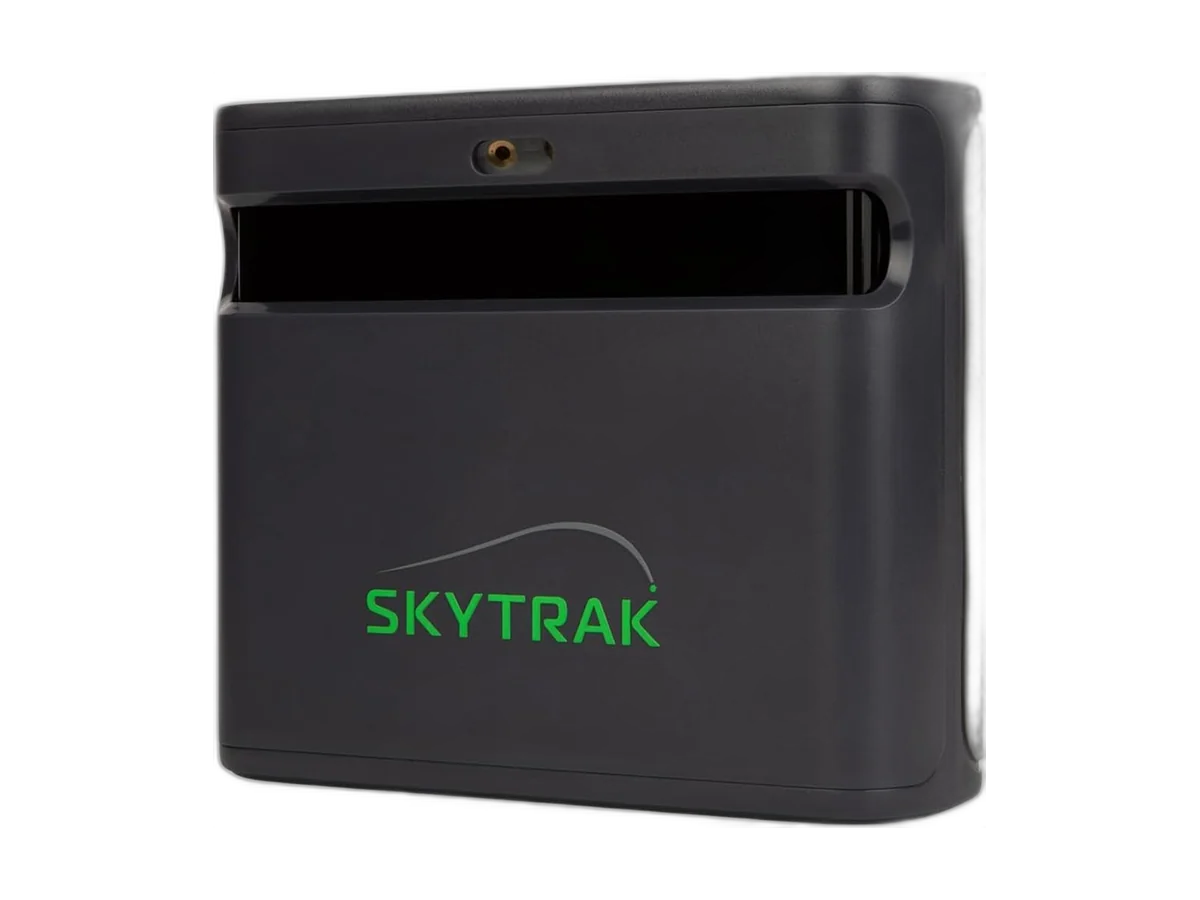
Buy the R50 if a spare room or garage is becoming a bay and you want measured spin without assembling a PC. Skip it if outdoor carry trends are the job. The R10 is the portable radar in this family. The SkyTrak ST MAX is the other current monitor we cover if you care more about practice software than a built-in screen. Compare the two Garmins here: R50 vs R10.
If the room is already measured and you want the enclosure in the same order, that is a different purchase from the monitor alone. Start with the home simulator guide and a hitting surface such as the SIGPRO Softy before you assume the R50 fills the room by itself.
Verdict
The R50 is the Garmin that can be the simulator, not just a sensor that feeds one. Buy it when the bay is the product. Buy the R10 when portability and price matter more.
How we built this review: manufacturer specifications (Garmin’s Approach R50 and R10 comparison and Garmin’s product page), independent testing from respected golf equipment reviewers, and long-term owner feedback, weighed against the closest alternatives.
Frequently asked questions
Does the Garmin Approach R50 need a PC?
No. Garmin says the built-in 10-inch color touchscreen runs Home Tee Hero by itself, so you do not need a separate gaming computer. HDMI can send the picture to a projector or TV while the unit still shows data or impact video.
Can the Approach R50 measure spin indoors?
Yes. Garmin says the three cameras measure total spin and spin axis indoors and outdoors, and that you can use any golf ball. The radar R10 is the one Garmin ties to Titleist RCT balls for more confident indoor spin.
How much space does the Approach R50 need?
Garmin says the cameras measure a small area around impact, so the R50 needs less indoor depth than the R10, which sits behind you and tracks a longer ball flight. Measure a full driver swing against your net before you buy either unit.
Is the Approach R50 worth it versus the R10?
Buy the R50 if the bay is the product and you want measured spin, a built-in screen, and putting on the same unit. Buy the R10 if you want a bag-portable radar for outdoor trends and can live with a phone app.
Featured in our buying guides
Alternatives